
FITTER BLOG
Featured






There is a tendency in endurance sport to assume that harder training must produce more fitness. Just because a session feels harder it doesn't necessarily mean it's producing a better training outcome…
One of the biggest mistakes in endurance sport is believing that successful athletes simply collect and copy the best workouts. In reality, successful athletes and coaches spend years learning how their own physiology responds to different kinds of training.
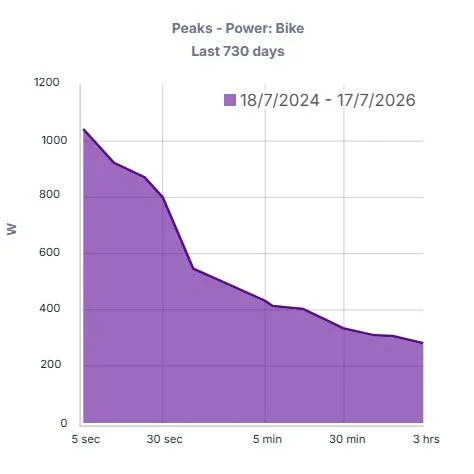
How can two athletes complete exactly the same VO2max workout and experience very different physiological responses? One place to begin looking is your power-duration curve, not because it gives us the answer, but because it may provide useful clues.
One of the biggest shifts an endurance athlete can make is recognising that success isn’t defined solely by the power they produce. Power matters enormously, just maybe not for the reason most of us assume.
If you've been on the fence about whether strength training is worth the time — hopefully this gives you a clearer picture of what it can do and where to start.
It’s often assumed this is the domain of short-course racing, but we may be missing both a valuable physiological training stress and an opportunity to better prepare for one of the most important parts of a 70.3 or IRONMAN.
Despite better access to sports science than ever before, triathletes still see wildly different outcomes when applying the same ideas. We look at why…
For decades, endurance sport has viewed the body like a machine, performing the same way every day, under the same fuel, same routine, same environment. But anyone who’s coached real people knows that isn’t how it works.
Among the three triathlon disciplines swimming often feels disproportionately taxing - and for good reason. Scientific research shows that moving through water demands up to four times more energy than moving the body through air.
When it comes to racing an IRONMAN in hot and humid conditions, starting the day well-hydrated can be as important as the months of training you’ve logged.
Most endurance athletes are quick to track pace, heart rate and power, but when it comes to fueling many leave it to guesswork. The truth is, that’s holding you back.
Triathletes spend hours perfecting training plans, dialling in nutrition and choosing the fastest gear. But science shows that there’s another performance enhancer hiding in plain sight: your expectations.
In recent years durability has become the most talked about concept I’ve seen in endurance sports science - and for good reason….
As an athlete you're used to pushing your body to get better, faster and stronger. But what if your workouts aren’t the only source of stress impacting your performance?
What if there was a metric that was both quantifiable and closely matched our perception of effort? Enter breathing frequency.
In the world of endurance sports nutrition advice is everywhere. While these messages are often well-intentioned, they can sometimes do more harm than good, especially for athletes with high energy demands.
AI Coaching - Are we at risk of losing something more fundamental… the human side of coaching?
The IRONMAN World Championship is returning to Kona but what does this mean for female athletes?
There’s a growing body of research pointing towards certain supplements that can significantly enhance endurance performance…
It’s often assumed that great runners will shine in the run leg of a triathlon, but that’s not always the case.
After long workouts of the same intensity and duration, running and cycling affect your muscles and nervous system differently.
While ERG Mode can be a powerful tool for structured training, it’s not always the best option for every workout.
Appropriate energy intake (or fuelling) is crucial for the health and performance of all athletes. When an athlete's energy intake does not align with energy expenditure, both short and long-term performance can suffer and negative health effects may arise.
Making informed tyre choices can lead to significant improvements in performance. Let's dive into why.
Sleep is an integral aspect of our health, well-being and athletic performance that often doesn't get the focus it deserves.